
West of Fort Worth, the city lets go quickly. The land rises into post oak and blackjack, folds into creek bottoms, and opens again into pasture.
Evenings come in gold and slow. Mornings smell like cut hay and wet limestone after a storm.
Horses outnumber stoplights in places. Pickups wave on county roads.
This is the Cross Timbers, and it has been ranch country for a long time.
Build Your Ranch in North Texas
Builders, ranches and land for sale across Parker, Wise, Hood and the Cross Timbers, all in one place. See the North Texas page →
Why People Build Here
Room. A few acres or a few hundred, with sky in every direction and Fort Worth still within reach.
Horses. Weatherford has called itself the Cutting Horse Capital of the World since the late 1980s, and the trainers, vets, arenas and feed stores that come with that are everywhere.
Hunting and water. Whitetail, dove and turkey on private ground, and big lakes like Possum Kingdom and Granbury for weekends.
Schools and small towns. Courthouse squares, Friday night football and county fairs still anchor life here.
And the drive. Many people here work in Fort Worth or the western side of the Metroplex and come home to land at night.
The Land
The Cross Timbers is a patchwork: belts of post oak and blackjack oak on sandy soil, broken by prairie and pasture on heavier clay. Cedar and mesquite move in where land goes unmanaged.
Around Aledo, Weatherford and Granbury the land rolls gently. West toward Mineral Wells and Possum Kingdom it turns rugged, with sandstone bluffs and the Brazos cutting through hills locals call mountains. North, in Wise and Jack, it opens into rangeland. South, around Stephenville, it’s dairy and hay country.
Typical parcels: Near Fort Worth, most listings are 2 to 20 acre homesites. Farther west, 50 to several hundred acres is common, and working ranches still change hands in Jack, Young and Palo Pinto counties.
What it costs:
- The Texas Real Estate Research Center at Texas A&M reported Northeast Texas (its Region 4, which includes the Dallas area) at $9,073 per acre in 2Q 2025, with a median tract of 122 acres. County-level figures vary.
- The Center put the statewide average at a record $5,214 per acre for 2025 (published April 2026).
- The Dallas Fed’s 3Q 2026 agricultural survey put North Central Texas ranchland at $8,167 per acre, up 10.1% from a year earlier (a small sample of three banks).
- Small acreage near the Metroplex sells for far more per acre than those averages, and big western ranches for less. Local comps matter more than any regional figure.
What you’ll find: improved pasture (coastal Bermuda), native grass, scattered post oak motts, wet-weather creeks, stock tanks, old barbed wire and pipe fence, and on many tracts, a gas well pad or pipeline right-of-way.
Water, Wells & Utilities
Water is the first question to ask here, and the most important.
Aquifers. The eastern half of the region draws from the Trinity Aquifer, including the Paluxy, Glen Rose, Twin Mountains, Travis Peak and Antlers layers. The Texas Water Development Board describes the water as fresh but very hard near the outcrop, and saltier with depth. In much of Palo Pinto, Jack and Young counties, groundwater is more limited and less predictable. Ask a local driller what they’re seeing nearby.
Wells. Domestic wells can run from a few hundred feet to well past that, depending on where you are. Get quotes from local drillers early; a deep cased well with pump and pressure tank is a real line item. Ask neighbors about their wells, and pull nearby drillers’ reports from the TWDB.
Groundwater districts.
- Upper Trinity Groundwater Conservation District covers Parker, Wise, Hood and Montague counties. New wells must be registered before drilling. The district lists a $600 new well registration fee plus a refundable $100 completion report deposit. Spacing rules apply, and non-exempt (non-domestic, non-ag) wells are metered.
- Parker County’s December 2025 subdivision rules reference 2.0 acres of groundwater rights per lot under Upper Trinity rules, and generally require a groundwater availability certification for new subdivisions.
- Middle Trinity GCD covers Erath County. Check its current rules before drilling.
- Palo Pinto, Jack and Young counties do not appear to have a groundwater district. In August 2026, Jack County leaders were weighing whether to join Upper Trinity or create their own district as data center projects arrive.
Rural water. Special utility districts and water supply corporations serve some rural roads. A meter can be cheaper than a well, but some systems have waitlists.
Septic (OSSF). Nearly every rural homesite uses one. In Parker County, a permit needs a licensed site and soil evaluation, a licensed design and a $480 fee (2025). Aerobic systems also need a maintenance contract. Each habitable structure needs its own system.
Electric co-ops.
- Tri-County Electric Cooperative (Azle): Parker, Wise, Hood, Palo Pinto, Jack and more; 105,000+ members.
- United Cooperative Services: Hood, Erath, Palo Pinto, Johnson, Somervell and more.
- Wise Electric Cooperative: Wise, Parker, Jack, Cooke, Denton, Clay and Montague.
- Fort Belknap Electric Cooperative (Olney): Young, Jack, Palo Pinto and more.
Ask the co-op early about line extension costs. On a long driveway, they can be significant.
Propane is common for heat, ranges, water heaters and backup generators. Most buyers own or lease a tank.
Internet. Better than it was. Nextlink built fixed wireless covering about 95% of Wise County in 2023, with speeds up to 500 Mbps. In 2026, Syntrio acquired Tri-County Electric’s roughly 250-mile fiber network serving parts of Parker, Wise, Hood, Palo Pinto, Jack, Young and other counties. Starlink fills the gaps. Check the exact address before you buy.
Before You Buy: What to Check
- Access. Deeded frontage on a public road, or only an easement? Get any easement recorded.
- County vs. private road. Confirm who maintains it. A private road means you pay for upkeep.
- Floodplain. Check FEMA maps. Creek frontage can flood fast.
- Wildfire. Cedar and dry grass burn hot, and the Possum Kingdom area has seen major fires. Plan defensible space and a second way out.
- Hail and tornadoes. Spring storms are frequent. Ask about roof claims and insurance costs.
- Drought and heat. Weatherford averages about 34.8 inches of rain a year (NOAA 1991–2020 normals). Summers reach triple digits, and stock tanks can go dry.
- Deed restrictions and HOAs. These often limit barndominiums, house size, livestock or further splitting.
- Mineral rights. This is Barnett Shale country. The Dallas Fed counts Wise as a core county, with Parker and Hood in the extended core. Minerals are often severed. Learn who owns them and where wells, pads and pipelines sit.
- County rules. Texas counties have limited zoning, but they regulate subdivisions, septic, floodplain and driveways.
- Survey. Get a new one showing boundaries, easements and flood zones.
- Soil and perc. Have soils evaluated before closing. Rock and clay can mean a costlier aerobic system.
Taxes & Ag Exemptions
Texas has no state income tax. Local property taxes make up the difference, so they matter.
2025 rates (per $100 of taxable value):
- Parker County: county 0.2350. Weatherford ISD 1.0342, Aledo ISD 1.1942, Mineral Wells ISD 0.9637 (2025 DFW tax rate compilation from Republic Title).
- Wise County: county 0.2175. Decatur ISD 0.8968 (same source).
- Hood County: county 0.2797. Granbury ISD 0.9296 (City of Granbury, tax year 2025).
- Jack County: county 0.4420 (adopted for FY 2025–26, per the Jacksboro newspaper).
- Erath, Palo Pinto and Young counties: check each county appraisal district for current rates.
Rural parcels outside city limits usually pay county, school district and sometimes emergency services district taxes. Rates change every year and vary by parcel, so check the appraisal district for each property you’re considering.
1-d-1 agricultural (open space) valuation taxes land on what it can produce, not its market value. It can cut the land portion of your bill sharply. To qualify:
- The land must be used mainly for agriculture (grazing, hay, crops) at the intensity common in that county.
- It must have been in ag use for 5 of the past 7 years, so buying land that already has the valuation is easiest.
- You apply with the county appraisal district (usually by April 30).
- Each appraisal district sets its own minimum acreage and stocking rates.
- Changing to non-ag use triggers rollback taxes.
Wildlife management valuation starts from land that already has ag valuation. You file a Texas Parks and Wildlife plan (form PWD-885) with the appraisal district and carry out at least three of seven approved practices each year, such as habitat control, supplemental water or census counts.
Building Your Ranch Here
Cost. NAHB’s 2024 Cost of Constructing a Home survey put average construction cost nationally at about $162 per square foot, for typical builder homes. Custom ranch homes here, with stone, timber, deep porches and rural site work, generally run well above that. Barndominiums can cost less per square foot. HomeAdvisor’s 2026 guide puts contractor-built barndominiums at about $150 to $190 per square foot.
Budget separately for the well, septic, electric line, driveway, culverts and pad prep. On raw land, those can add tens of thousands of dollars.
Season. You can build year-round. Spring rain stalls site work and summer heat slows crews. Fall is the favorite time to pour slabs.
Materials and style.
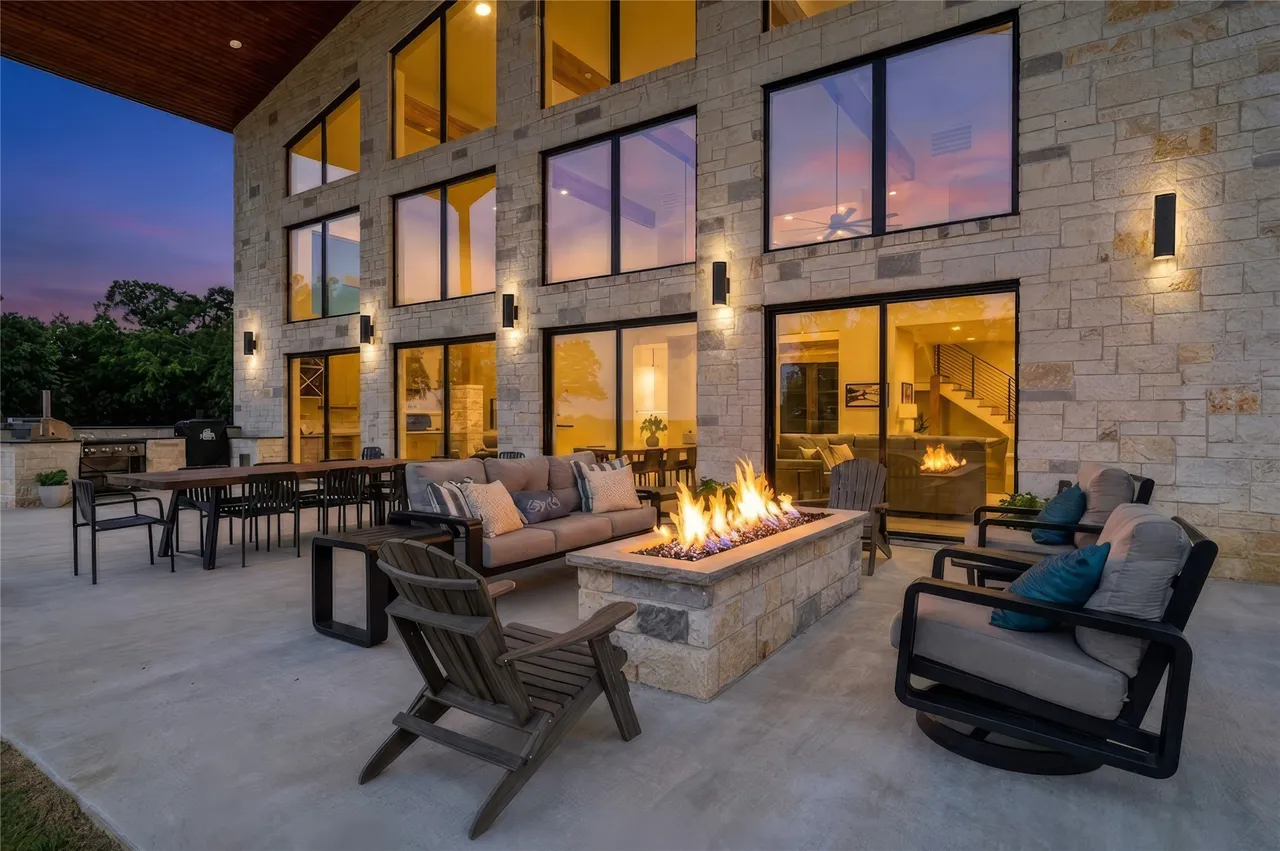
- Native limestone and sandstone, often in chopped or ledgestone patterns
- Standing-seam metal roofs, practical for hail and heat, and good for rainwater catchment
- Barndominiums and shop houses, popular with horse owners
- Heavy timber, reclaimed beams and cedar posts
- Deep porches that catch the south breeze and block the west sun
Permitting. In unincorporated areas, counties generally don’t issue residential building permits or inspect framing the way cities do. You’ll still need septic, floodplain and driveway approvals and a 911 address. We recommend third-party inspections anyway.
Ready to talk about plans? Meet our hand-picked North Texas builders.
Towns to Know
Weatherford
The Parker County seat and the heart of cutting horse country, with a courthouse square and summer peach stands. It sits on I-20 with full shopping and healthcare. It suits horse people and families who want land and a real town.
Aledo
Small, polished and growing fast on Fort Worth’s southwest edge, with a school district that draws families. It suits buyers who want acreage close to the city and can pay for it.
Granbury
The Hood County seat, with a historic square and opera house on Lake Granbury. It suits lake lovers, retirees and anyone who wants water and a lively downtown.
Decatur
The Wise County seat, on US 287 toward Fort Worth and Denton, ringed by ranchland and arenas. It suits buyers who want room to the north and a manageable commute.
Mineral Wells
A former spa town in rugged Palo Pinto County, with a downtown on the rebound and two lakes nearby. It suits those who want hills, value and quiet.
Stephenville
The Erath County seat and home of Tarleton State University. Dairy, hay and rodeo run deep, and the town calls itself the Cowboy Capital of the World. It suits ag-minded buyers who want college-town amenities.
Jacksboro
A small frontier-history town in Jack County, home to Fort Richardson, surrounded by open range and larger tracts. It suits buyers ready for true rural life and longer drives.
Graham
The Young County seat, with a huge courthouse square and Lake Graham close by. It’s oil and cattle country. It suits ranch buyers who want more acreage for the money.

Ranch Life
Horses. Weatherford’s cutting horse industry brings trainers, breeding farms, equine vets, tack shops and trailer dealers together in one county. The Weatherford Chamber estimates its economic impact at over $50 million a year. Each fall the NCHA Futurity fills Fort Worth’s Will Rogers Memorial Center (November 16 to December 12 in 2026).
Rodeo. The Frontier Days PRCA rodeo comes to Weatherford each June, and most county seats have an arena with jackpot ropings and play days.
Feed, supply and vets. Every county seat has family-run feed and ranch supply stores, and large-animal vets work across the region. Texas A&M AgriLife Extension offices help with soil tests, forage and ponds.
Hunting. For 2026–27, Texas Parks and Wildlife lists the North Zone general whitetail season as November 7, 2026 to January 3, 2027, with archery October 3 to November 6. Dove, turkey and feral hog hunting are popular too. Check county-specific rules in the Outdoor Annual.
Fishing and water.
- Possum Kingdom Lake: about 17,900 acres of clear water on the Brazos, owned by the Brazos River Authority (TWDB)
- Lake Mineral Wells State Park & Trailway: a 640-acre lake, rock climbing at Penitentiary Hollow, and a 20-mile trailway to Weatherford open to horses
- Dinosaur Valley State Park near Glen Rose: dinosaur tracks in the Paluxy River and a horse riding area
- Fort Richardson State Park in Jacksboro: restored 1860s fort buildings and a 9-mile trailway
- Palo Pinto Mountains State Park near Strawn: about 4,800 acres, Texas’s newest state park, planned to open in 2026
- Lake Granbury, Lake Weatherford, Lake Bridgeport, Lake Graham and countless stock tanks for bass and catfish
Where to Eat
- Dayne’s Craft Barbecue, Aledo: brisket good enough to rank No. 7 in Texas Monthly’s 2025 Top 50.
- Eighteen Ninety Grille & Lounge, Granbury: steaks and a porterhouse worth the drive, just off the historic square.
- North Texas Smoke BBQ, Decatur: a Texas Monthly 2025 Top 50 pick that opened a permanent spot on US 287 in 2026.
- Mary’s Cafe, Strawn: famous since 1986 for a chicken fried steak that hangs off the plate, about 30 minutes from Mineral Wells.
- Jake & Dorothy’s Cafe, Stephenville: serving chicken fried steak and pie since 1948.
- Wildcatter Ranch Steakhouse, Graham: steaks on a hilltop above the Brazos valley, with breakfast and dinner daily.
Worth the Drive: Attractions & Annual Events
- Fort Worth Stock Show & Rodeo: mid-January to early February (January 16 to February 7 in 2026).
- Parker County Sheriff’s Posse Frontier Days Rodeo, Weatherford: June.
- Parker County Peach Festival, downtown Weatherford: the second Saturday of July, held since 1984.
- Wise County Old Settlers Reunion, Decatur: late July, a tradition for more than 140 years.
- Red Steagall Cowboy Gathering, Fort Worth Stockyards: late October.
- Harvest Moon Festival of the Arts, Granbury square: October.
- NCHA World Championship Futurity, Fort Worth: mid-November to mid-December.
- Possum Kingdom Lake: summer boating and the Hell’s Gate cliffs.
- Granbury Opera House and square: shows and shopping all year.
The Practical Stuff
Hospitals.
- Medical City Weatherford (103 licensed beds, chest pain and primary stroke center)
- Lake Granbury Medical Center, Granbury
- Medical City Decatur (Level IV trauma)
- Palo Pinto General Hospital, Mineral Wells
- Texas Health Stephenville
- Faith Community Hospital, Jacksboro
- Graham Regional Medical Center
- For major trauma, Fort Worth’s larger hospitals are the nearest higher-level centers.
Airports. DFW International and Dallas Love Field handle commercial flights. Fort Worth Meacham and Alliance serve private aviation, and several county seats have general aviation airports.
Approximate drive to downtown Fort Worth (off-peak):
- Aledo: 25 minutes
- Weatherford: 35 minutes
- Granbury: 45 minutes
- Decatur: 45 minutes
- Mineral Wells: 1 hour
- Jacksboro: 1 hour 15 minutes
- Stephenville: 1 hour 15 minutes
- Graham: 1 hour 45 minutes
Add 30 to 45 minutes for Dallas or DFW Airport. I-20 and I-30 traffic into Fort Worth can be heavy at rush hour.
School districts. Each main town has its own ISD. Smaller rural districts include Brock, Peaster, Millsap, Springtown, Tolar, Lipan, Santo, Paradise and Bridgeport. District lines don’t follow town names, so check the address. Weatherford College and Tarleton State are close by.
FAQ
How much does ranch land cost west of Fort Worth?
The Texas Real Estate Research Center reported Northeast Texas at about $9,073 per acre in 2Q 2025. Small tracts near Aledo and Weatherford cost much more per acre, and large ranches in Jack, Young and Palo Pinto counties often less.
Do I need a permit to drill a water well in Parker County?
Yes. In Parker, Wise, Hood and Montague counties, new wells must be registered with the Upper Trinity Groundwater Conservation District before drilling, and spacing rules apply.
How many acres do I need for an ag exemption?
It depends on the county. Each appraisal district sets its own minimums, and the land generally needs 5 of the past 7 years in ag use. Call the appraisal district before you buy.
Can I build a barndominium here?
Usually. Zoning is limited outside cities, but deed restrictions can prohibit metal buildings. Read them before you make an offer.
Will I have gas wells near my property?
Possibly. Wise, Parker and Hood sit in the Barnett Shale. Drilling has slowed since 2011, but wells and pipelines are common. Check the Railroad Commission map and your title work.
Is internet good enough to work from home?
Often, yes. Co-op fiber is spreading, fixed wireless covers most of Wise County, and Starlink works almost everywhere. Check the specific address.
When you’re ready, the Cross Timbers will wait for you: oak, open sky and a porch facing west at sundown.
Meet the builders who know this ground, and see ranches and land for sale in North Texas.
Figures and dates in this guide were gathered in October 2026 from public sources, including the Texas Real Estate Research Center, the Dallas Fed, county appraisal and groundwater districts, and Texas Parks and Wildlife. Rules, rates and prices change, so confirm details with the county and a local agent before you buy.