Ranch Life · Design
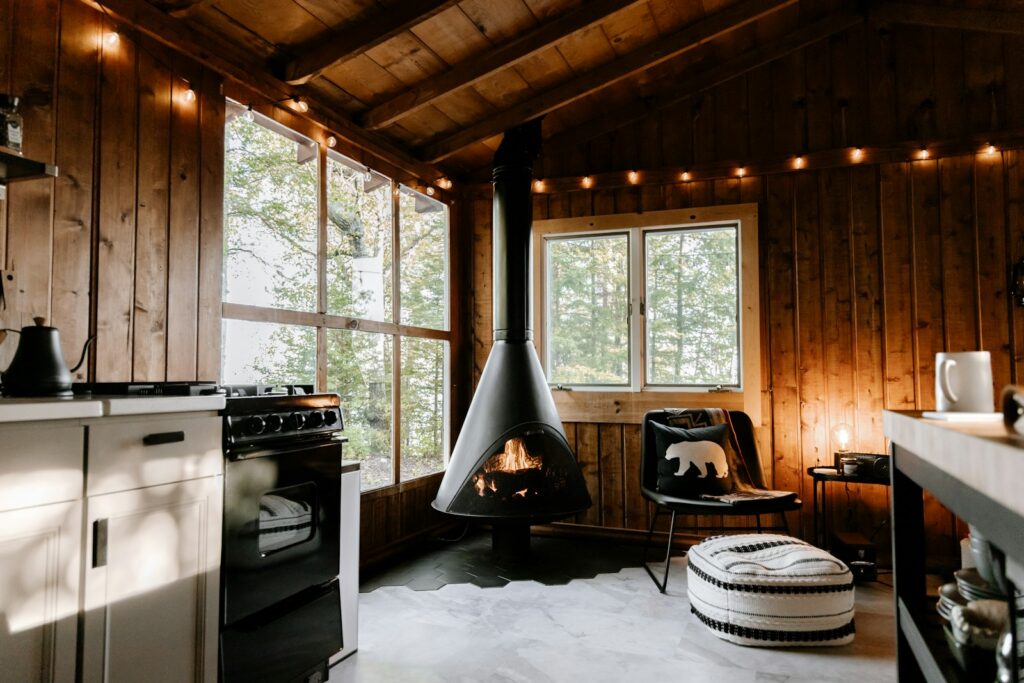
One fire you build by hand, one log at a time. One you fill with a scoop and set like a thermostat. Both can make a ranch house feel warm on the coldest night of the year.
If you’re choosing a stove, the pellet-or-wood question comes up fast.
The honest answer is that both are good. They just suit different ways of living. Here’s how they compare, and which one we’d choose for life on the land.
How Each One Works
A wood stove burns split logs. You build the fire, add wood as it burns down, and adjust the air to control the heat. It’s simple, with few moving parts, and it can last for decades.
A pellet stove burns small pellets made from compressed sawdust. You pour them into a hopper, and an electric auger feeds them into the fire while fans move the heat into the room. Many run on a thermostat, so you set the temperature and let it work.
Side by Side
| Wood stove | Pellet stove | |
|---|---|---|
| Works when the power goes out | Yes | Not without a battery backup or generator |
| Day-to-day effort | Hands-on: loading, tending, carrying wood | Easy: fill the hopper about once a day |
| Heat control | By hand, with the air controls | Thermostat and settings |
| Fuel | Firewood, which you can cut yourself | Bagged pellets you buy |
| Storage | A woodpile or woodshed | A dry spot for pallets of bags |
| Venting | A full chimney | Often a smaller vent through a wall |
| Upkeep | Ash removal and a yearly chimney sweep | Regular cleaning and moving parts to service |
| Cooking on top | Yes, on most models | No |
| The feeling | A real crackling fire | A steady, tidy flame |
The Case for a Wood Stove
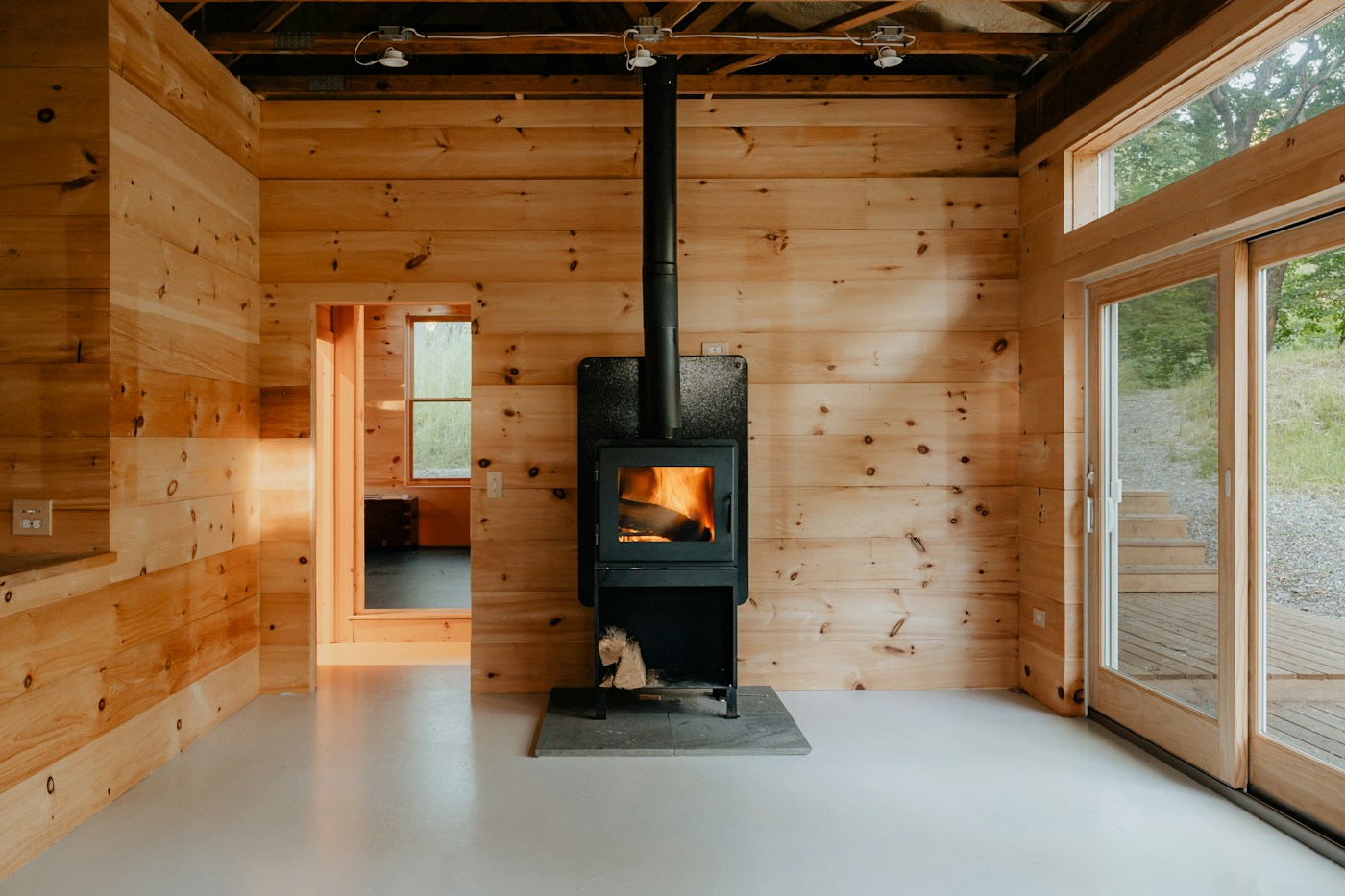
It keeps working when the grid doesn’t. On a ranch at the end of a long county road, that matters more than anything. When a storm takes the power out, a wood stove keeps the house warm, boils water and cooks supper.
The fuel can come from your own land. If you have timber to thin or deadfall to clear, your heat can cost little more than a saw, a splitter and a few good fall weekends.
And there’s the fire itself. The crackle, the smell of pine, the glow through the glass. For many families, that’s the whole point.
The Case for a Pellet Stove
It’s easy. No splitting, no stacking, no tending the fire every few hours. Fill the hopper, set the temperature, and go about your day.
It’s steady and clean. Pellets are uniform and very dry, so they burn evenly with little smoke and less ash to carry out.
It’s flexible to install. Many pellet stoves vent through an outside wall rather than needing a full chimney, which can make them easier to add to an existing home, a guest house or a barndominium.
It’s a lovely choice for a home where you’re gone during the day, for a part-time place, or for anyone who wants the warmth of a fire without the chores.
The One Question That Settles It
Ask yourself: what happens when the power goes out?
A pellet stove needs electricity for its auger and fans. If outages are rare and short, or you have a battery backup or a standby generator, that’s no problem. If you live where winter storms can leave you without power for days, a wood stove is the safer bet.
Our Take
For a full-time ranch home, especially in the mountains, we’d choose a wood stove. It works no matter what the weather does, it can run on wood from your own land, and nothing beats a real fire at the heart of the house.
For a weekend cabin, a guest house, or a home closer to town, a pellet stove makes a lot of sense. It’s warm, easy and ready when you walk in the door.
And plenty of ranch families end up with both: a wood stove in the great room for the coldest nights, and a pellet stove in the guest house, the shop or the bunkhouse.
Either way, the evening ends the same. Boots off, the dogs stretched out by the warmth, and the snow coming down past the window.
Choosing a wood stove? See the best wood stoves for a ranch home, learn which firewood burns hottest, and use our firewood calculator to plan your winter.
Always have a stove installed by a certified professional and follow local codes.